Gold fringe on the Iron Curtain [Part 1]
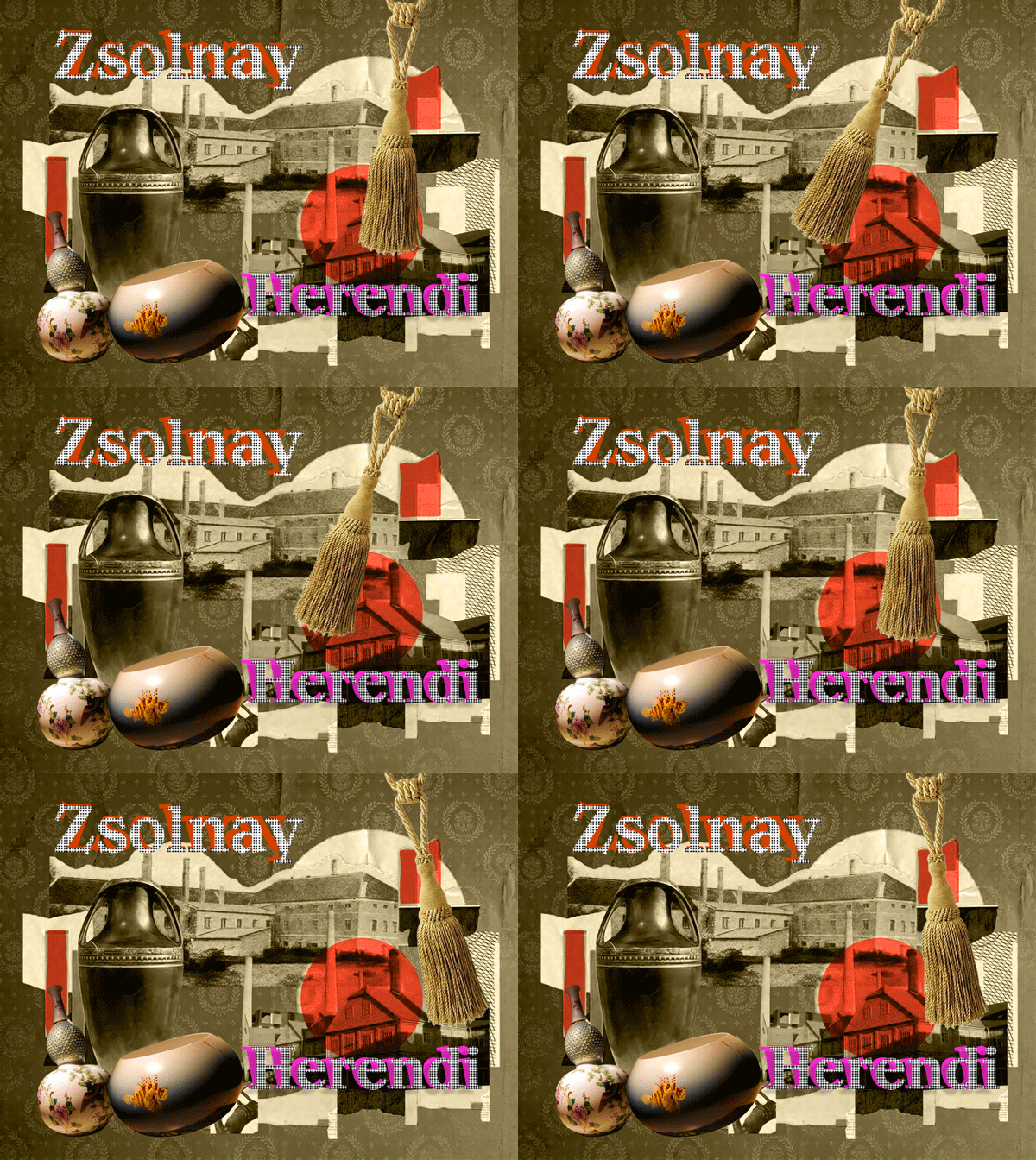
How does a workers’ state promote its aristocratic past? Two porcelain brands, two opposite decisions, and a system that needed foreign currency. In the first installment of our series, we examine the history beyond the Iron Curtain of the Herendi and Zsolnay brands.

![Gold fringe on the Iron Curtain [Part 1]](https://storage.ghost.io/c/bc/dc/bcdc50a4-7d47-4779-a7df-239e7ed7a2f9/content/images/size/w1920/2026/09/aranyzsinor.gif)
The system that kicked the Zsolnay family out of its own factory within hours, and took the Zwack factory away without a penny of compensation spent the next four decades selling legends about queens, emperors, and counts to capitalists for hard currency. This story is about the strangest marketing task of socialism: how a worker state advertises an aristocratic past – and what anyone who works with brands today can learn from it.
Although our blog Reklámtörténet [Advertising History] suddenly transformed into a magazine called Beyond Taglines, we must not forget where this whole initiative started. From hard advertising history. In this article we are repaying an old debt, namely to the history of Hungarian advertising. We have unfairly paid little attention to it, which of course has its reasons. One reason, for example, is that for most of the 20th century our country—and thus our market economy—was in the hands of various unpleasant figures, so our advertising profession did not shine as it otherwise probably could. But to the point!
There are a few stories in Hungarian advertising history that are worth watching in slow motion again.
We are in 1952, one of the darkest years of Rákosi’s era: at home, peace-time loan registrations, forced deliveries, and the bas-reliefs on the podium of the recently inaugurated Stalin statue. Yet, in the same year, posters were made for Tokaji Aszú for the Monimpex Foreign Trade Company—with English, German, and French inscriptions. Next to them magazines advertising blistered apricot brandy and Debrői Hárslevelű, carefully written in foreign languages.
While the country inwardly endured the harshest true dictatorship, it outwardly practiced a false smile.
Because the plans had to be fulfilled, the plans required machines, and the machines required foreign exchange. And the foreign exchange existed where the bourgeoisie was: on the other side of the Iron Curtain.
Thus the situation arose that the most diligent agent of the proletarian dictatorship became the old Hungarian aristocratic past: a queen’s order, a king’s bon mot, a wine region whose riches were drunk by rulers. Through four brands, let us see what happened when the socialist state had to sell brands in the West whose value was given by the very world it had rejected at home.
The rule: the state became the trader
First, let’s look behind the scenes.
In socialist Hungary foreign trade was a state monopoly, which specialized foreign trade companies (in common language simply called "impexes") could handle. The masters of beverages, wine, and tobacco became Monimpex, which in September 1948 was registered to handle the sale of state monopolies. The founding document’s product list is itself a period piece: from raw tobacco to wine distillates, rum and champagne, to rock salt, flint and sugar. One company that simultaneously bore the responsibility for the nation’s wine and the nation’s flint… that’s portfolio purity for you.
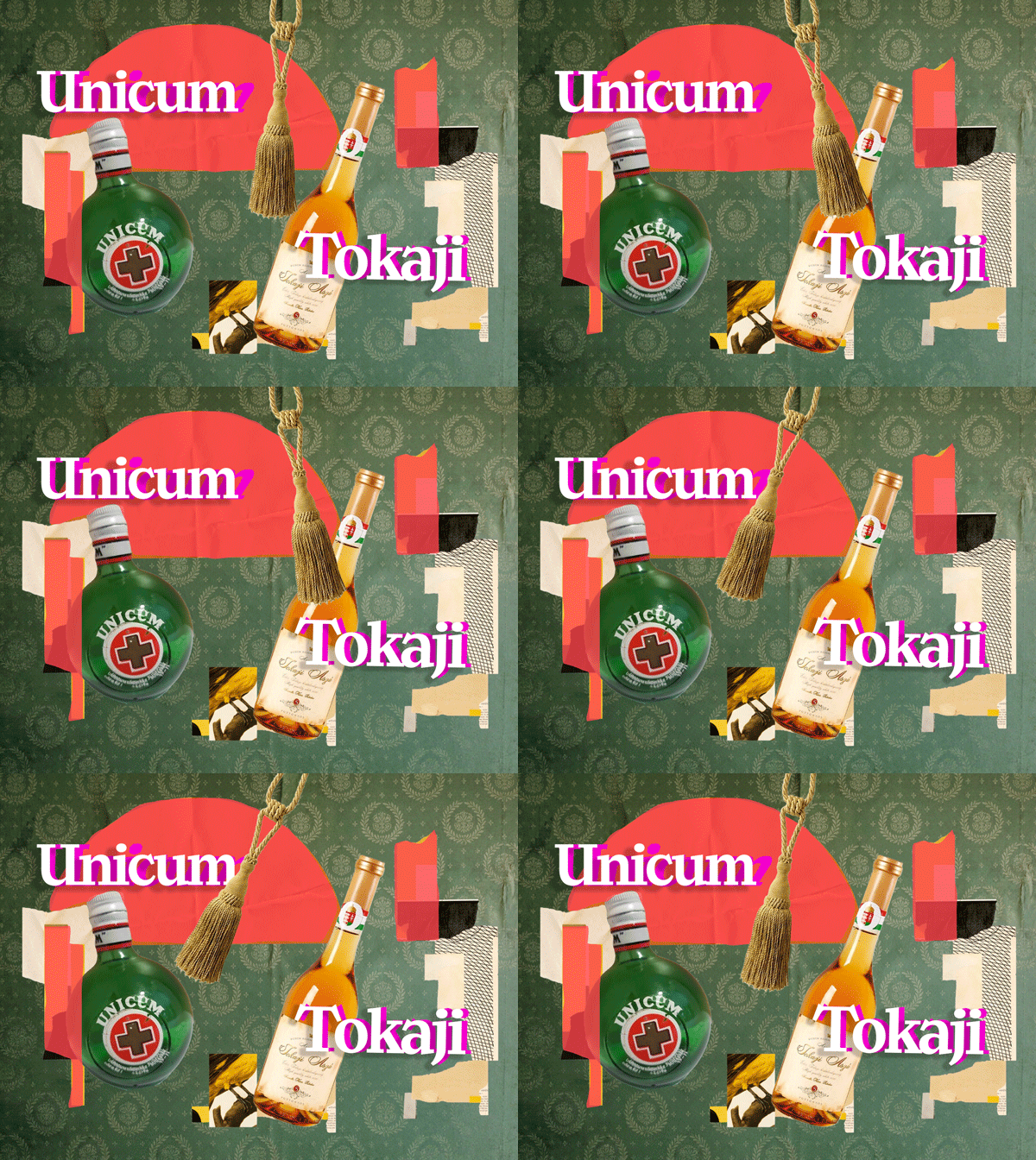
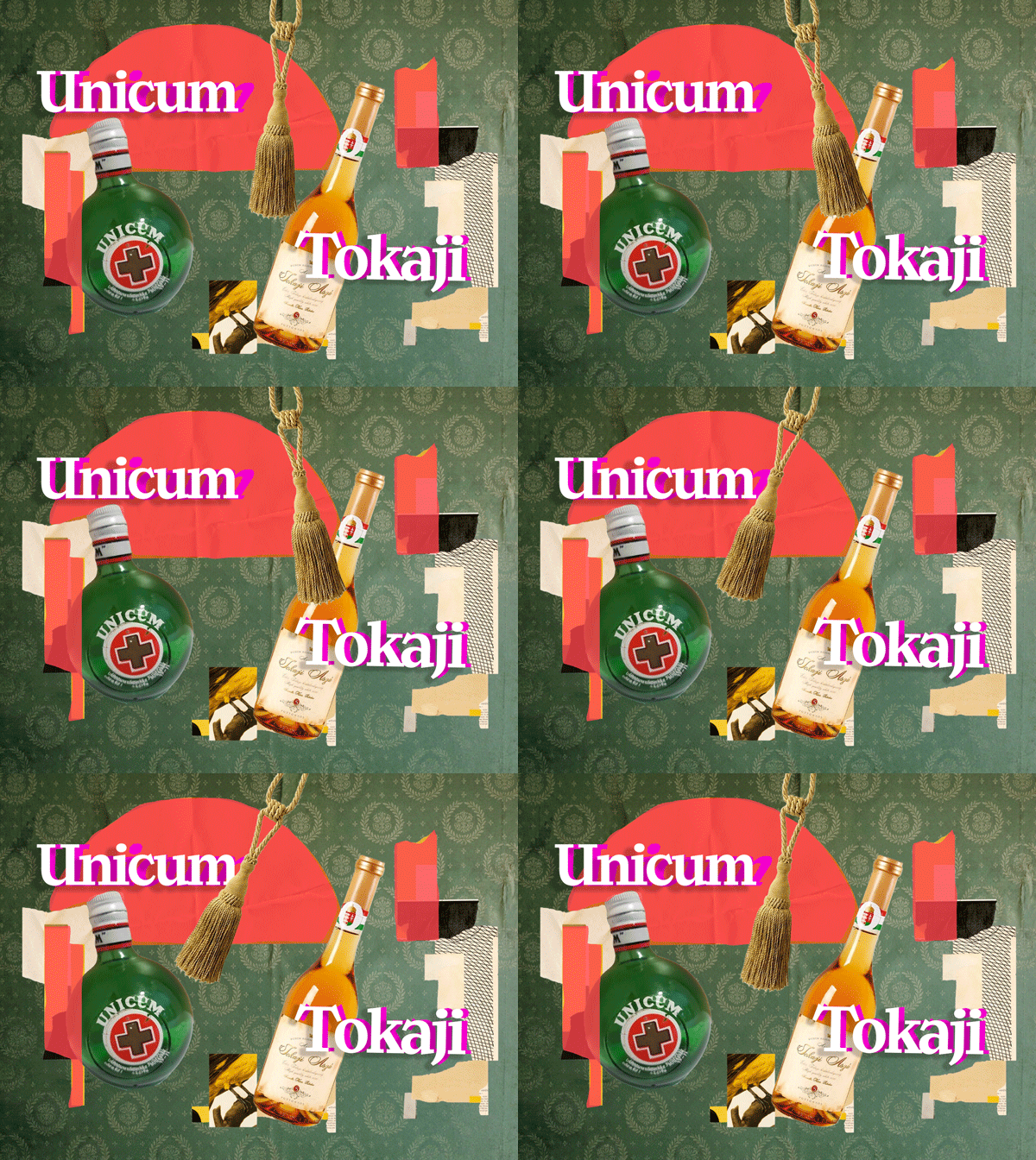
The point is that for example wine could go abroad only through Monimpex. In other words, Tokaji, Eger, Badacsony—and for a long time Unicum too—had a single exit route out of the country.
The impex was at once distributor, agency and brand owner; the production economies behind the label remained practically invisible. It’s no wonder that a good comrade-impex could be eating caviar from a cauldron while everyone else sliced sausage paper-thin on bread.
The trade channel was thus controlled by the state. The interesting question from there is what they did with brands that had to be sold through this channel.
Herendi: the butterfly that Queen Victoria let loose
The Herend manufactory started in 1826, but what made the brand truly great for a moment: the 1851 London World's Fair, where Queen Victoria’s eye caught a butterfly-flower, Chinese-inspired pattern, and immediately ordered stock to Windsor Castle. (By the way: since then this has been the factory’s most famous pattern, appropriately named Victoria.)
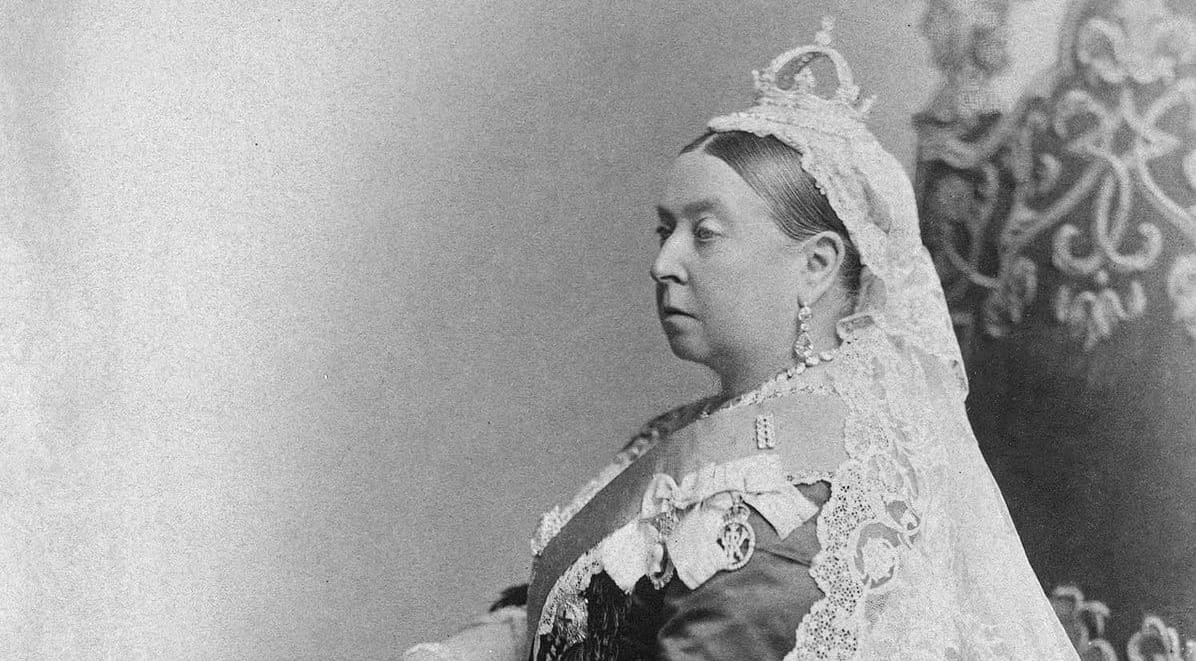
From a marketing perspective this is the best-perhaps the most unamortized Hungarian advertising tool of all time: a single order, 175 years of continuous awareness, zero media spend.
Before the war Herend was a private company: Jenő Farkasházy Fischer bought the manufactory in 1896, turned it into a joint-stock company in 1923, and from 1926 Gyula Gulden brought the brand back to the international forefront, so the export strategy based on diplomatic gift-giving was already refined. After the nationalization on March 2, 1948, Herend was in theory as an out-of-place phenomenon to the hypocritical comrade as any aristocratic mansion.
In practice, however, it became one of the most reliable foreign currency mines for the planned economy.
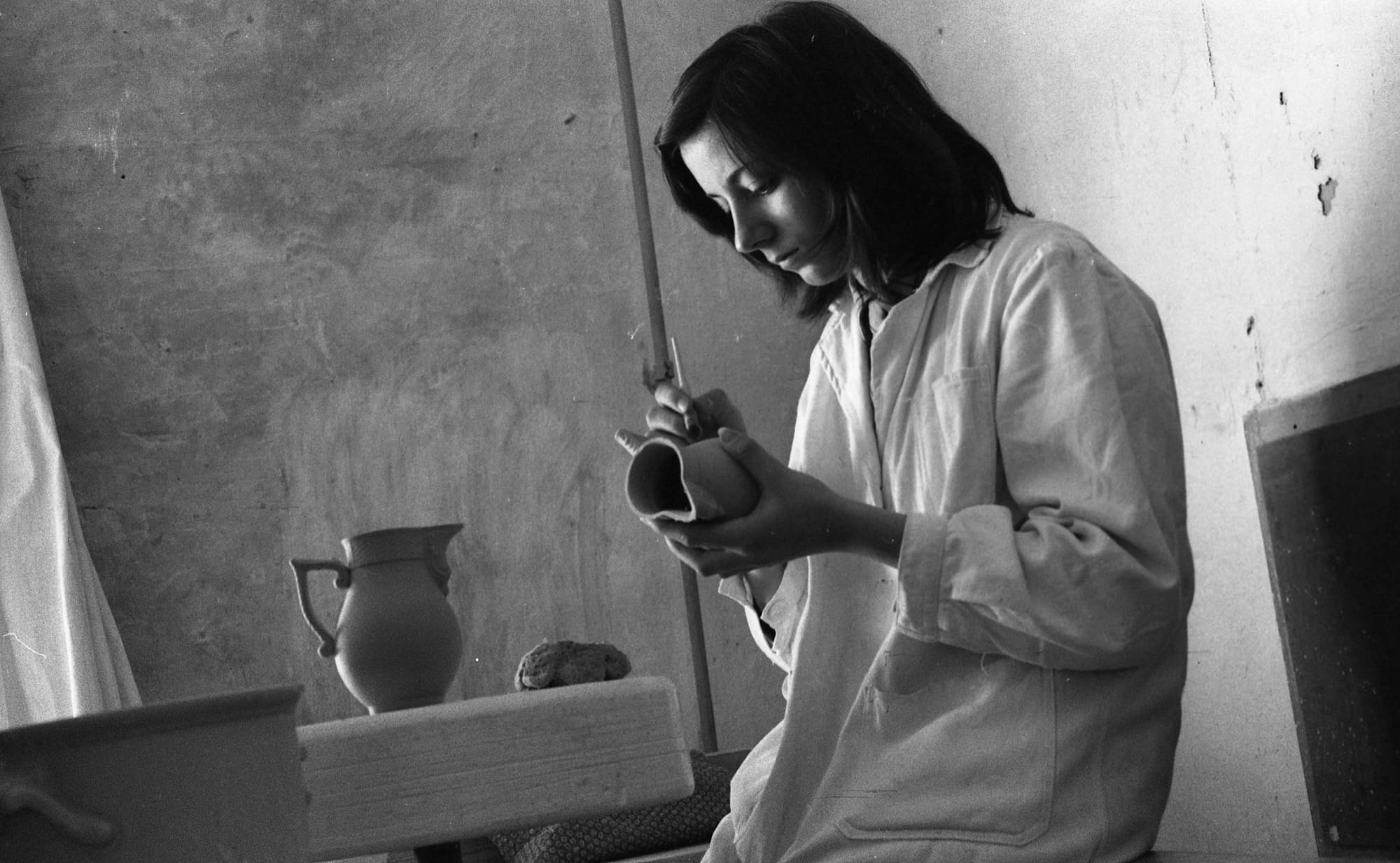
The manufactory could preserve its prestige, and the state gladly seized the opportunity: through Herend exports, it gained substantial hard currency, and in the second half of the century new markets opened from Australia to the Bahamas (and of course to the Soviet Union). The formula was disturbingly simple: it was the patterns that brought dollars, which ideologically were the most embarrassing—Victoria, Rothschild, Apponyi. Exporting a Rothschild-named décor from the existing socialism: the sentence should cancel itself in two halves. Fortunately the currency did not read Marx… and as it turned out, neither did the comrade, if they were paid for it.
Herend’s great lesson is continuity. The main motifs and the tradition of hand painting were left essentially untouched: because the brand valued currency exactly as it had always been.
It is no coincidence that the diplomatic gifting, a Habspurg-era genre, survived everything: for William and Catherine’s wedding, Hungary officially sent as a wedding gift a 45-piece Herend dinner set, featuring the Royal Garden décor developed for the Victoria pattern for this occasion. Then for Princess Charlotte’s birth again Herend went to London. By the way, the set is available for purchase by anyone, with only one small difference: the butterfly on the aristocrat’s lid is on the Windsor set a crown.
What happens if the brand name is also nationalized - the Zsolnay story
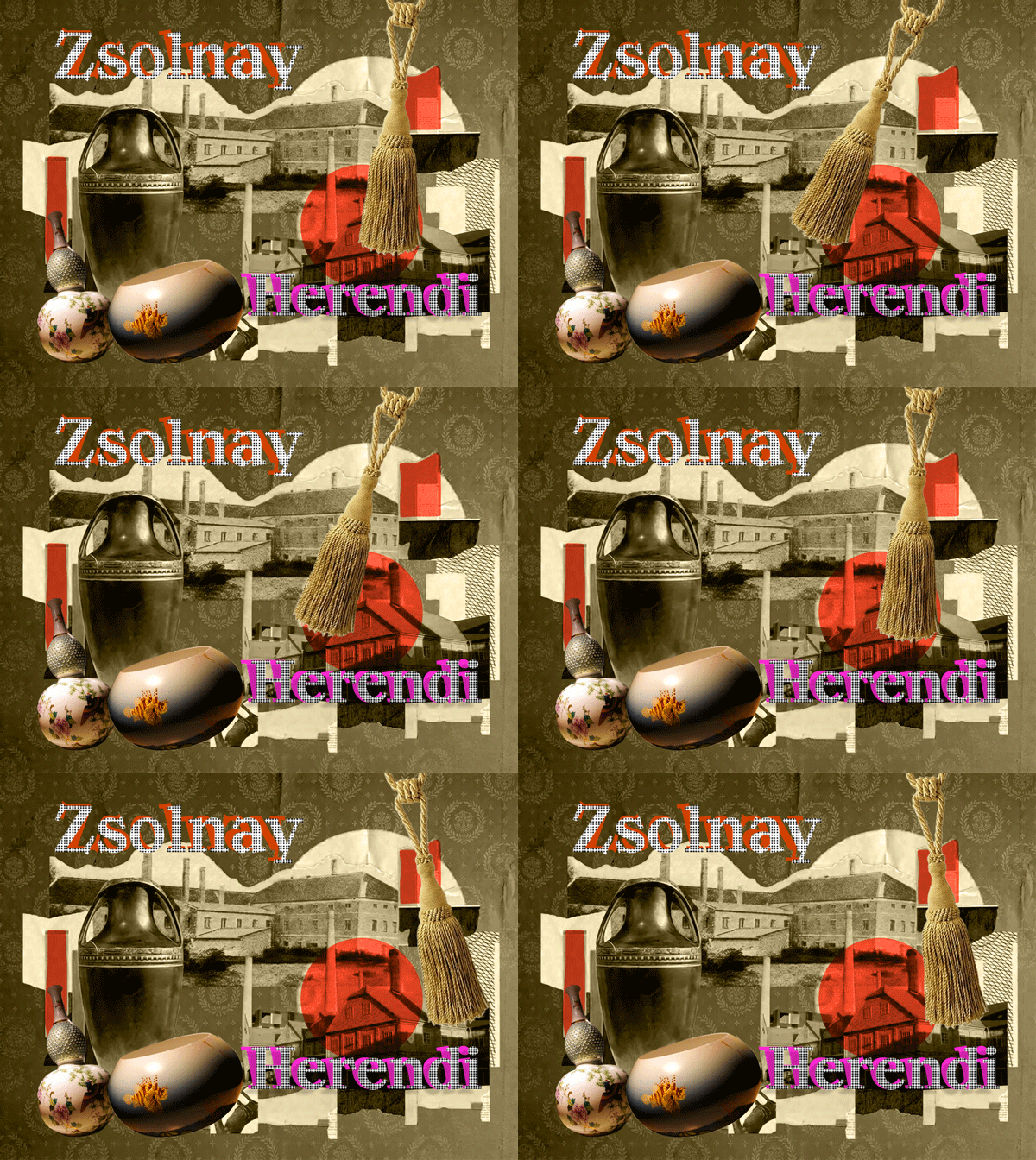
And then the counterexample. The Pécs Zsolnay factory – the star of the turn-of-the-century world fairs, the fortress of eozin and pirograhite – also fell under state ownership in 1948, but here the regime did not spare the brand. In fact, it did not spare the family either.
A pirogránit is a special ceramic material used for decorating buildings (facades, roofs, bricks), and even used to make sculptures and bas-reliefs. It was durable and withstood weather. The eozin is a special glaze technology that makes the surface glow in different colors depending on how the light hit it. Both were unique innovations of the Zsolnay factory.
Family members were expelled from the factory, and they were given only a few hours to leave it. Some of them were later relocated to Hortobágy.
According to memoirs, in the confusion of the “takeover,” a mass of valuable porcelain and casting molds was destroyed.
The factory’s first five-year plan mostly produced industrial porcelain (for insulation) for electrification, and although from 1953 production of ware and decorative arts restarted, the decline did not stop: in 1963 the factory lost its autonomy and, adopting the stylish name “Finomkerámia-ipari Országos Vállalat Pécsi Porcelángyára” (National Plant for Fine Ceramic Industry Porcelain Works at Pécs), it was transformed into a directly supervised plant.
Read that name again! Finomkerámia-ipari Országos Vállalat Pécsi Porcelángyára. The world’s one of the most beautiful-sounding brand names was reduced to the name of a single organizational unit. Marketing conferences in the country hadn’t even started, right?
Then came the twist that makes this story a must-have in every brand-building curriculum: in 1974 the state factory made a deal with one of the heirs, Margit Mattyasovszky-Zsolnay, to again use the Zsolnay name and brand marking. In other words, the system that had deprived the family of its own property (its factory!) a quarter of a century earlier now signed a contract with the same family… for its own factory, its own brand, i.e., for its own name.
There is no cleaner proof that brand value lives not in real estate, not in machinery or in labor, but in the name and the narrative attached to it.
The building could be taken in a single day; the name had to be renegotiated after twenty-six years.
But why did it have to be negotiated at all?The question is fair: the state already took the factory once, together with the name— the plant in the early fifties still ran as the Pécs “Zsolnay” Porcelain Factory National Enterprise, with the family name properly in quotation marks. But the name was casually discarded by the regime: in the 1963 reorganization Zsolnay simply dropped off the new sign, and for a little over a decade no one used it. So in 1974 it wasn’t about returning something, but about re-adopting it, and the convenience of continuous legal succession was no longer available.The most plausible explanation is that here property rights separate from personality rights. A factory, a machinery line, an established company name can be nationalized; the right to bear a name, however, belongs to those who bear the name, it cannot be itemized. While the company continuously carried the inherited name, this was never an issue, but reingaining a brand from a living family surname after ten years could only be done with the consent of the name-bearers according to the civil law of the era. Moreover, the export markets’ nationalization decrees meant nothing. Hence Margit Mattyasovszky-Zsolnay’s consent statement, in the words of the manufacturing histories, “on accepting the heritage of the past.” The name returned to the sign on May Day 1974.
After the name’s return, the brand slowly began to revive: in 1982 the factory regained its independence; in the eighties brand stores opened, and exports to England, Austria, Italy, West Germany, Japan, and even Iraq were restarted.
Herend and Zsolnay together thus publish the era’s most instructive A/B test: the same country, the same system, two opposing “brand strategies.”
One kept continuity, the other cut it: the difference is measurable in decades.
Two brands, two entirely different fates. In the 2. part of this series we go all the way to Tokaj, where the reputation held up for a long time even as the wine could no longer keep up. Then comes the real Unicum: a nationalized factory, a recipe sent abroad, and two competing versions of the same brand. Finally, Brussels, where they did not merely try to sell porcelain and drinks to the West, but to present Hungary’s carefully curated image.
(To be continued.)
Iratkozz fel, ha szeretnél tájékozódni a kreativitás, a kommunikáció és a kultúra világában, és kíváncsi vagy még őszinte, bullshit-mentes emberi gondolatokra az AI árnyékában.