

Tuning into Creativity: Jacob Collier and the „Wiggle” philosophy
What can we learn from one of the most exciting figures in contemporary music about the nature of creativity? A report on a concert that brought the Wiggle philosophy to life.


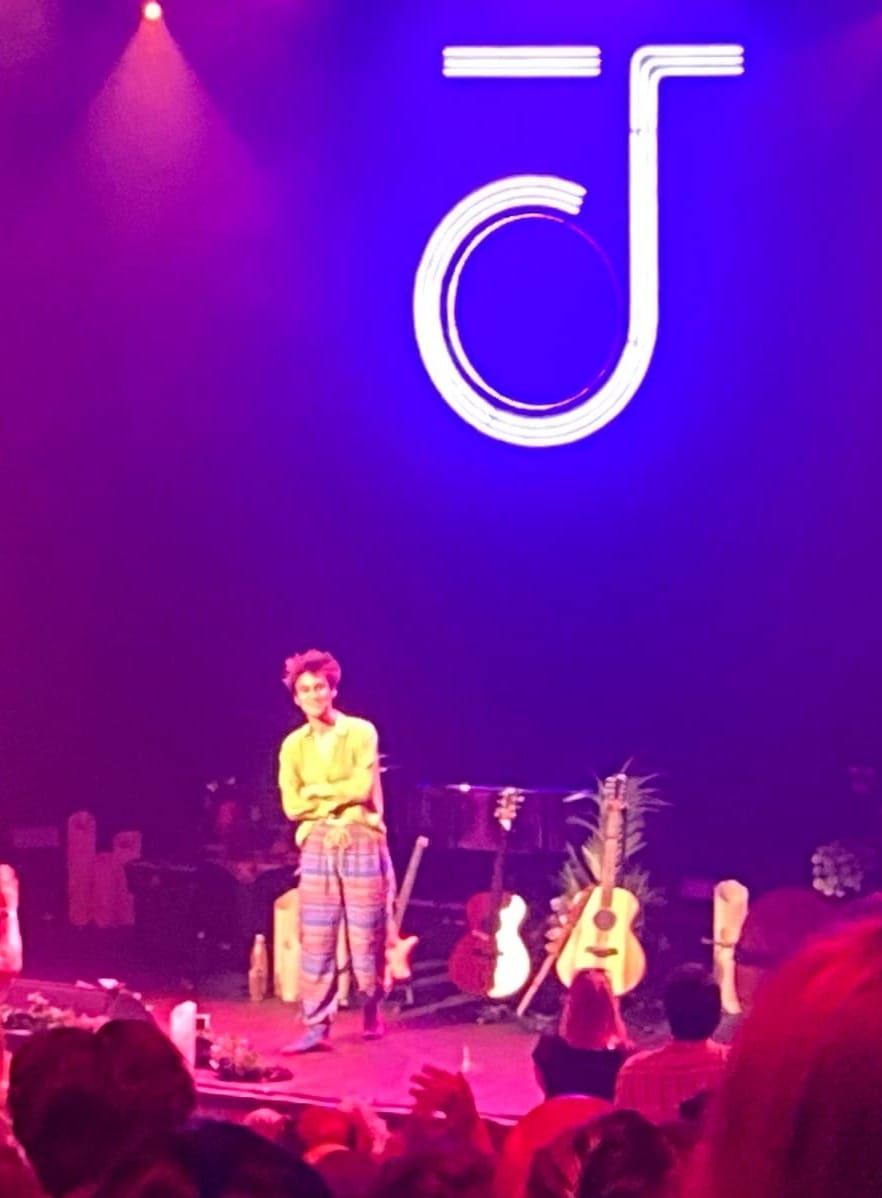
At a leisurely pace, we slowly make our way through the queue towards the Globe Wien entrance in the Viennese sunset, arriving in time for Jacob Collier's The Light for Days Tour concert. I read somewhere that the building was modelled on the London Globe, although this claim is difficult to substantiate from the outside; the Marx Halle’s expansive hall looks more like a logistics centre than a theatre. I was just about to complain that the auditorium must be made of pallets when I was pleasantly surprised by the modern interior design, spaciousness and great view of the stage. It really feels like a proper round theatre. That eases my nerves a bit.
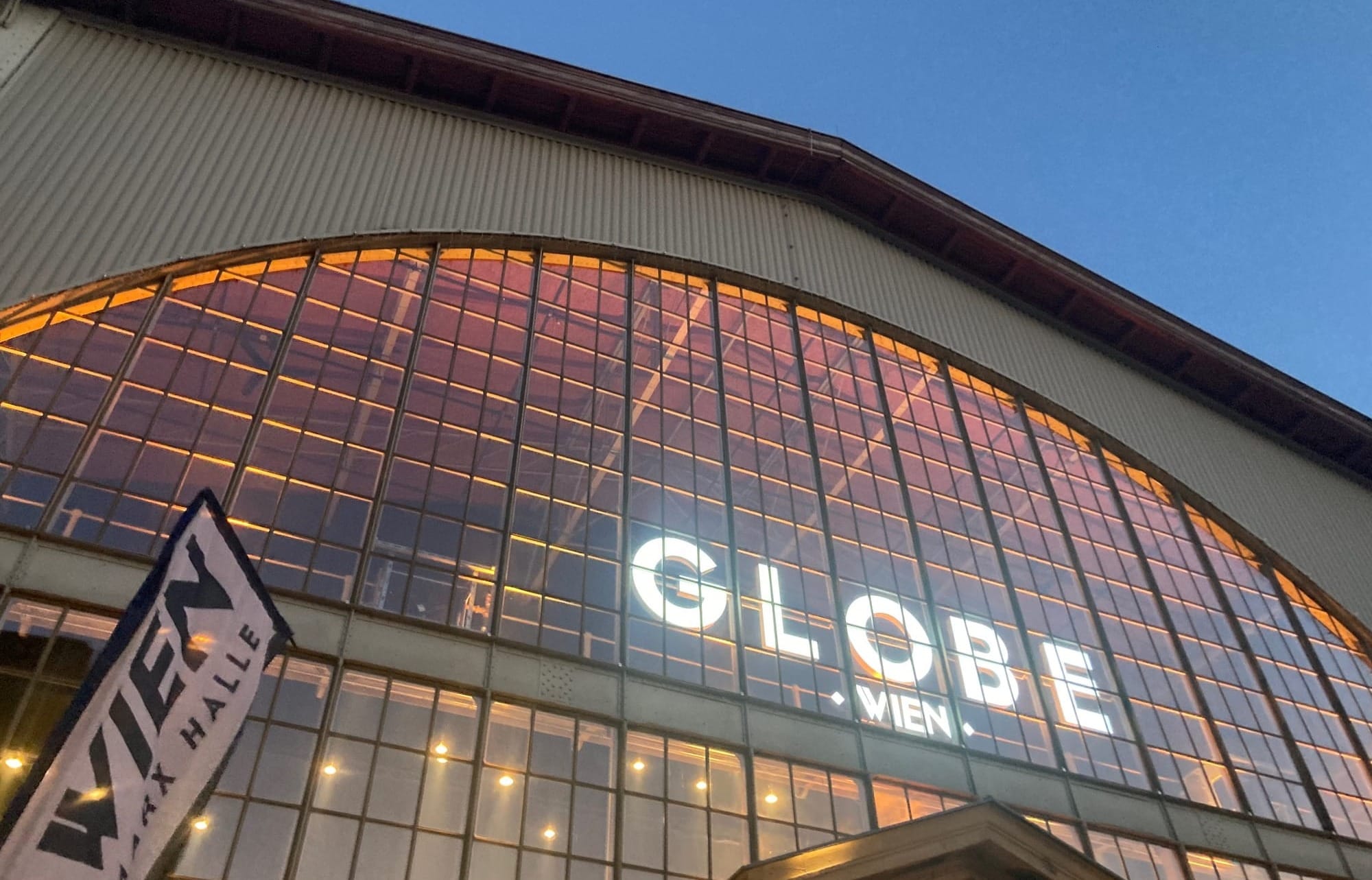
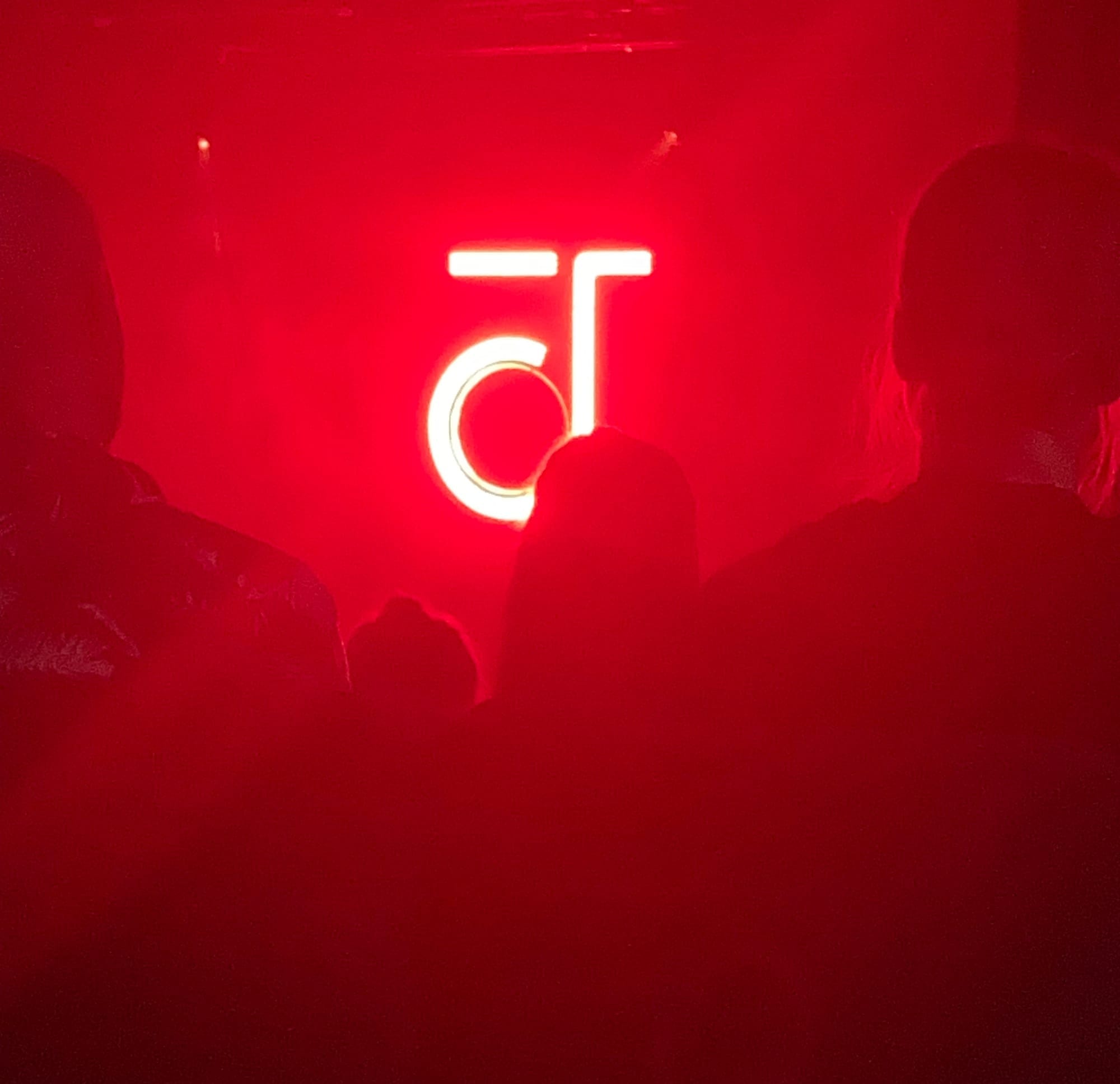
The concert’s stage setup is surprisingly minimalist: a single piano, three guitars propped on stands in front, here and there some large cardboard organ pipes (?) laid around, and in a vase some unfortunate plant. At the back on the wall a stylized note (the letter J!), glowing red. I don’t have time to decide whether this is an absurd piece or a provincial community centre vaudeville show because, at precisely 20:02, the sound of an acoustic guitar can be heard, accompanied by an ethereal voice.
And at that moment I already knew: I was about to experience something special.
Jacob Collier slowly walks into the spotlight, in his usual, dazzlingly garish, rummage-bag outfit. How else would a quirky-extraordinary amazing musician dress? How else would he exuberantly talk about him in Gladiator and the Oscar-winning (and in full: Rain Man, Inception, The Dark Knight, etc.) composer’s words?
„There are musical talents; there are geniuses; and above them all – far, far higher – somewhere in the stratosphere: Jacob Collier.” – Hans Zimmer
Admittedly, I hadn’t known the guy before. I’d seen a couple of YouTube videos about him, but nothing more. Very skilled, I thought at first, and even without my modest piano knowledge and rock-and-roll past it was easy to conclude: what he does is not an everyday achievement.
Yet experiencing it live, sitting in the audience at a Collier concert, is a completely different experience. It has that extra magic. Because it’s not only the music, the technical skill, the professionalism that captivates you, but what goes beyond it... the surprise, the unpredictability, the spontaneity. And Jacob knows exactly how creativity works; what prerequisites it has, what “environmental needs” it requires. Moreover, he does everything to maximize it as much as possible.
The British musician, composer, and producer was born in London in 1994 as Jacob Moriarty; to the world he became visible at the beginning of the 2010s with YouTube videos in which he performed well-known tunes a capella, or purely with his voice, in multiple parts. Impressive, by the way. It’s not surprising that talents have caught the eye of musicians like Quincy Jones, who later became his mentor. Collier is famous for “bold harmonic solutions,” “improvisational mindset,” and that he can sing to his audience from the stage. At his concerts we can feel like we are at a liberated, all-hands choir rehearsal – and we don’t even have to worry that the Everyone Aunt Erika is going to tell us to just hum! Also worth knowing: central to Collier’s musical work is curiosity, playfulness and constant experimentation, which is expressed in his self-developed “Wiggle” theory. But we’ll discuss that in a moment.
The “Wiggle” philosophy
We like to think of the creative process as a linear, goal-oriented one: we start brainstorming and, when the big idea pops into our heads, we create a plan and try to realise it step by step. The most exciting discoveries, the most original ideas and recognitions, the milestone (art)works are not endpoints on such a linear path. Creativity usually doesn’t spark where and when we most expect it – but we know well: where and when it is least expected. Detours, experiments, dead ends, mistakes. These are the moments we can't see in advance.
Jacob Collier invented the concept of “wiggle” to illustrate the creative process. The Hungarian translation is a bit tricky, because literally it means: fidgeting, moving here and there, twisting around. But in Collier’s sense: it expresses playful movement, deviation from rigid schemes, flexible adaptation to the world. Wiggle is a creative dimension where we don’t really know where we’re heading; but we are open to the possibility that anything can happen and we stumble upon something new.
To behave in a “Wiggly” manner means surrendering to uncertainty. For it’s not to conquer, but to accept and cooperate with it.
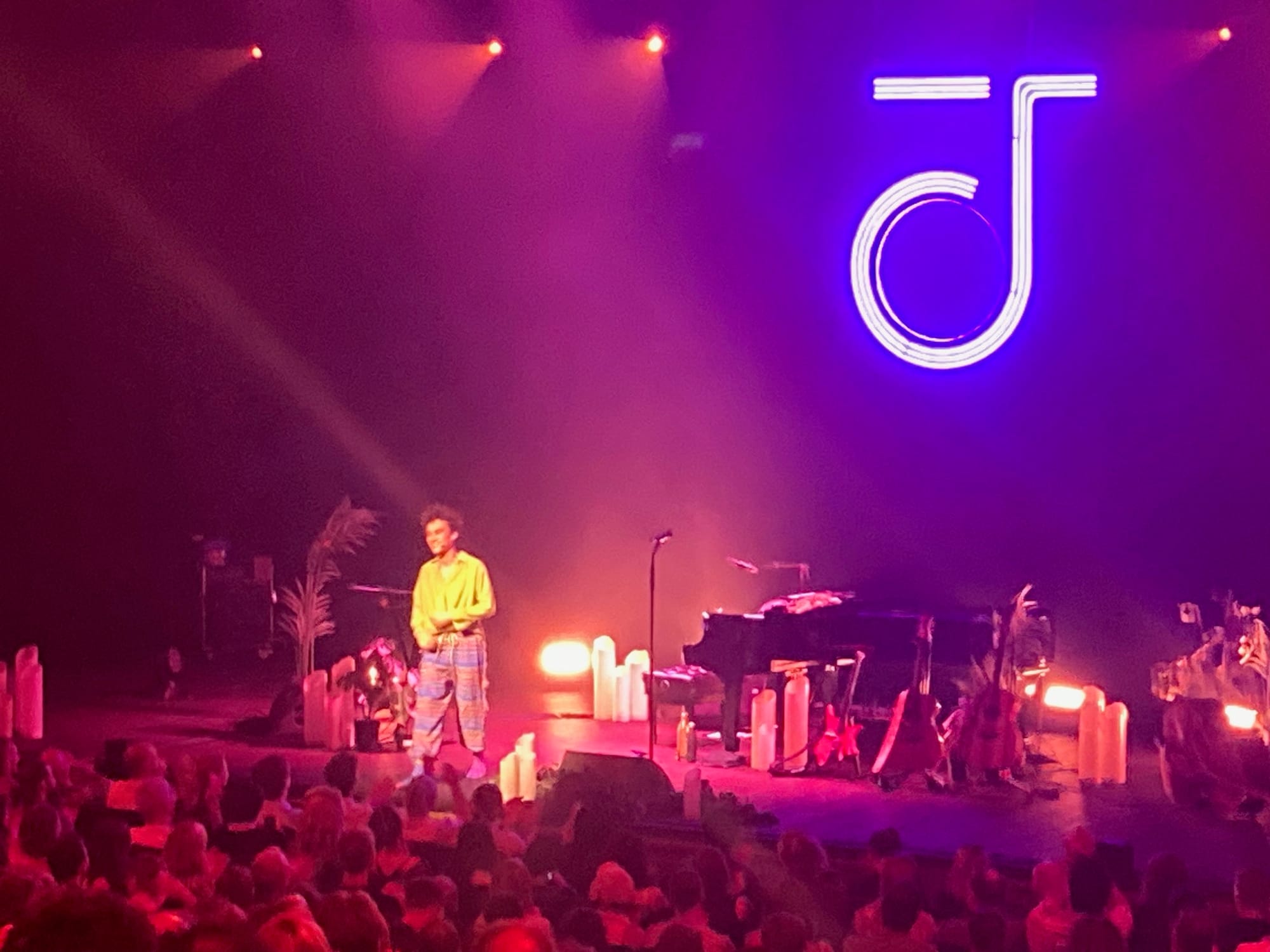
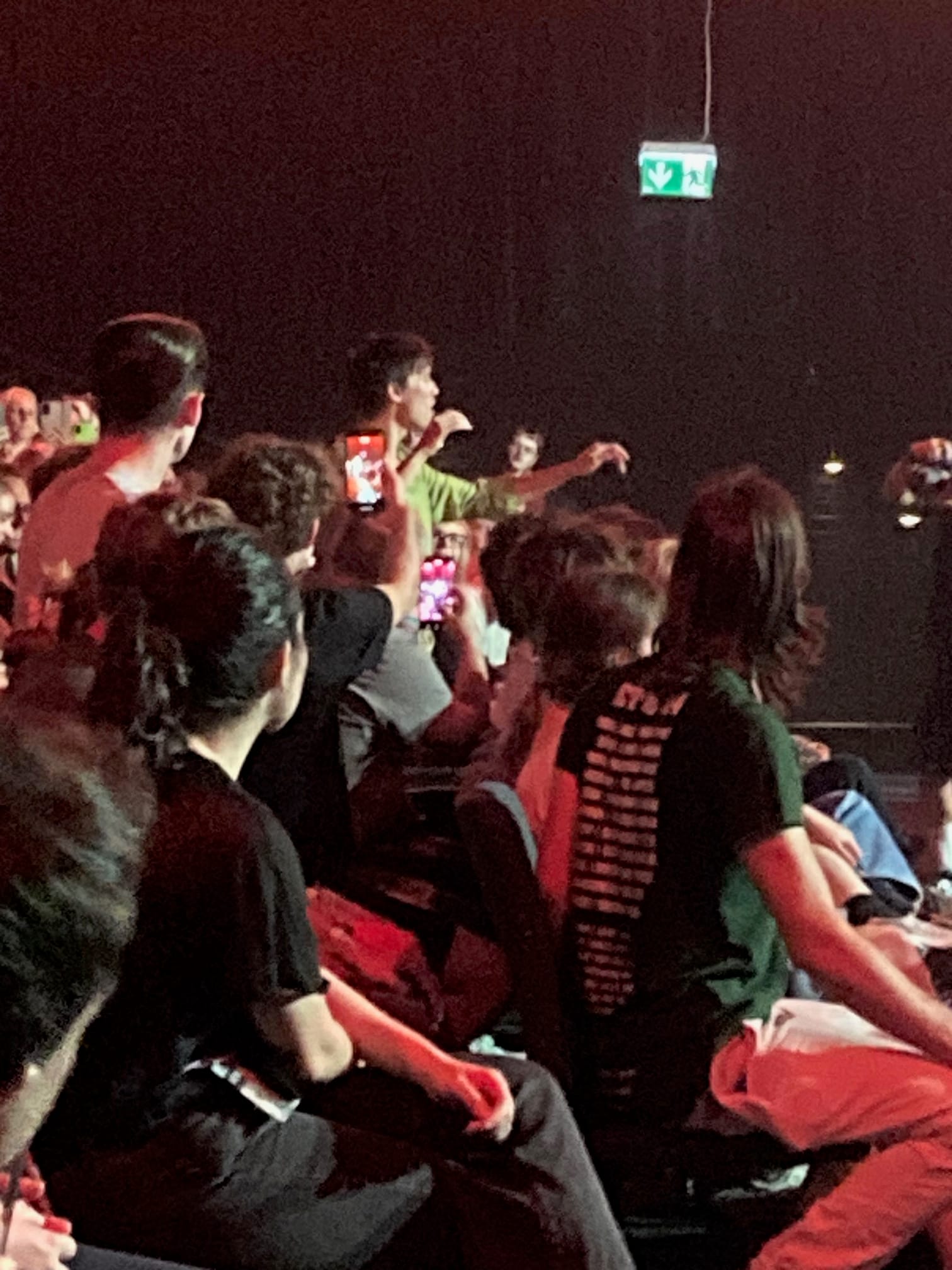
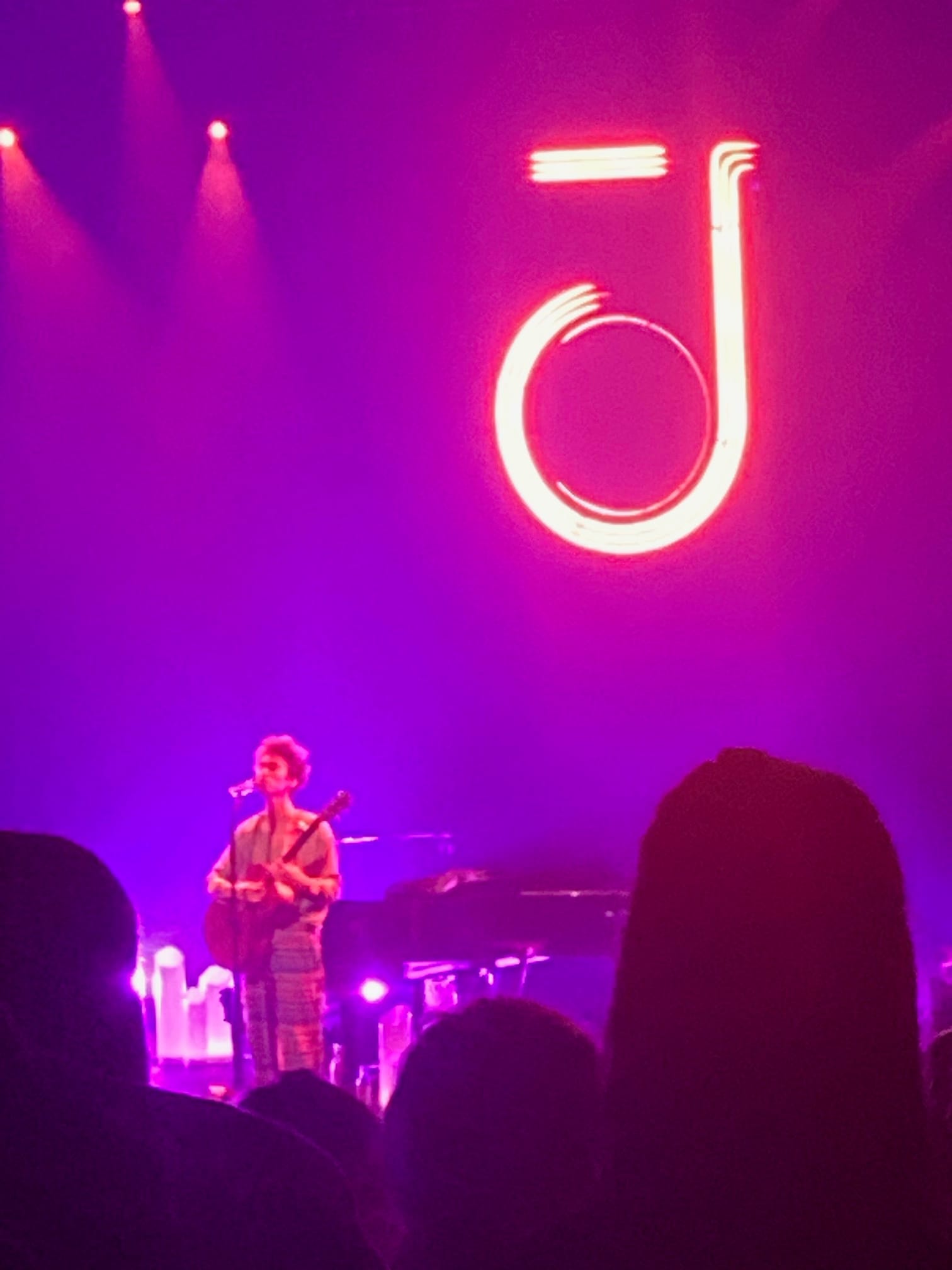
Photos from a concert (Photo: Levente Kovács) JacJacon
Creative harmony
Collier moves with astonishing ease, I mean: he wigglizes on stage, and after a while I catch myself mentally playing out the main tones of his creativity (which are both prerequisites and consequences of this creativity) such as:
• Playfulness –› because the guy is relaxed, carefree, infinitely liberated; at no moment does he take himself seriously, he winks to the audience, interacts with them, creates the possibility for group singing, turning it into a shared game.
• Improvization –› he surrenders to the process; yet he does not cling to any musical rules. He lets the moment, the mood, the feeling guide; someone in the audience starts whistling, he turns to that person, joins in, weaves it into the song, and soon half the audience is whistling along.
• Unpredictability –› of course, without this there is no playfulness or improvisation, but Collier even adds that in almost every song, every line, he surprises the listener. You’d expect a chord, a resolution, but he modulates into a different key so smoothly that you hardly notice, and he carries you into another world, then suddenly changes tempo, so we don’t even think that we know what the poet meant.
These three factors together ensure the surprise factor – i.e., the aha moment – which makes Jacob Collier’s performance not only an unforgettable auditory discovery but a creative Tour de Force.
Re-tuning
I would suggest that in everyday life we also try to practice the “wiggle” methodology. So there’s no need to tense up over things. Sometimes a little carefree ease, lightness helps. Let’s freely make space for chance, for uncertainty, for discovery. We may have our score to play from, but from time to time we can be a bit more forgiving of off-notes. And let’s dare to act spontaneously, don’t fear improvisation. Who knows what original and special chords may arise in this way?
As the famous Hungarian composer, Zoltán Kodály used to say: ”Music belongs to everyone”. Well, we can add: ”Creativity does too.”
Jacob Collier: The Light for Days Tour, Globe Wien, Vienna, 2026.09.08.
Iratkozz fel, és havonta küldünk hírlevelet, amitől sokkal okosabb leszel!









![Gold fringe on the Iron Curtain [Part 2]](https://storage.ghost.io/c/bc/dc/bcdc50a4-7d47-4779-a7df-239e7ed7a2f9/content/images/size/w750/2026/09/unicum-tokaji-2.gif)