Gold fringe on the Iron Curtain [Part 2]
What happens if the brand's history remains, but the product can no longer live up to it? A wine, a liqueur—and a country that was sold in the West. Part 2 of our series.

![Gold fringe on the Iron Curtain [Part 2]](https://storage.ghost.io/c/bc/dc/bcdc50a4-7d47-4779-a7df-239e7ed7a2f9/content/images/size/w1920/2026/09/unicum-tokaji-2.gif)
In Part 1, two porcelain brands demonstrated what a name is worth under a dictatorship: Herend was essentially left alone because it generated foreign currency, while Zsolnay was wiped off the corporate register, only to be reclaimed from the family twenty-six years later. Now comes the tougher question. What happens when the brand’s history remains intact, but the product can no longer live up to it? And what happens when the brand (and the product associated with it) decides to flee abroad? And after the stories of Tokaji and Unicum, it turns out that this whole affair was never just about wine and liqueur.
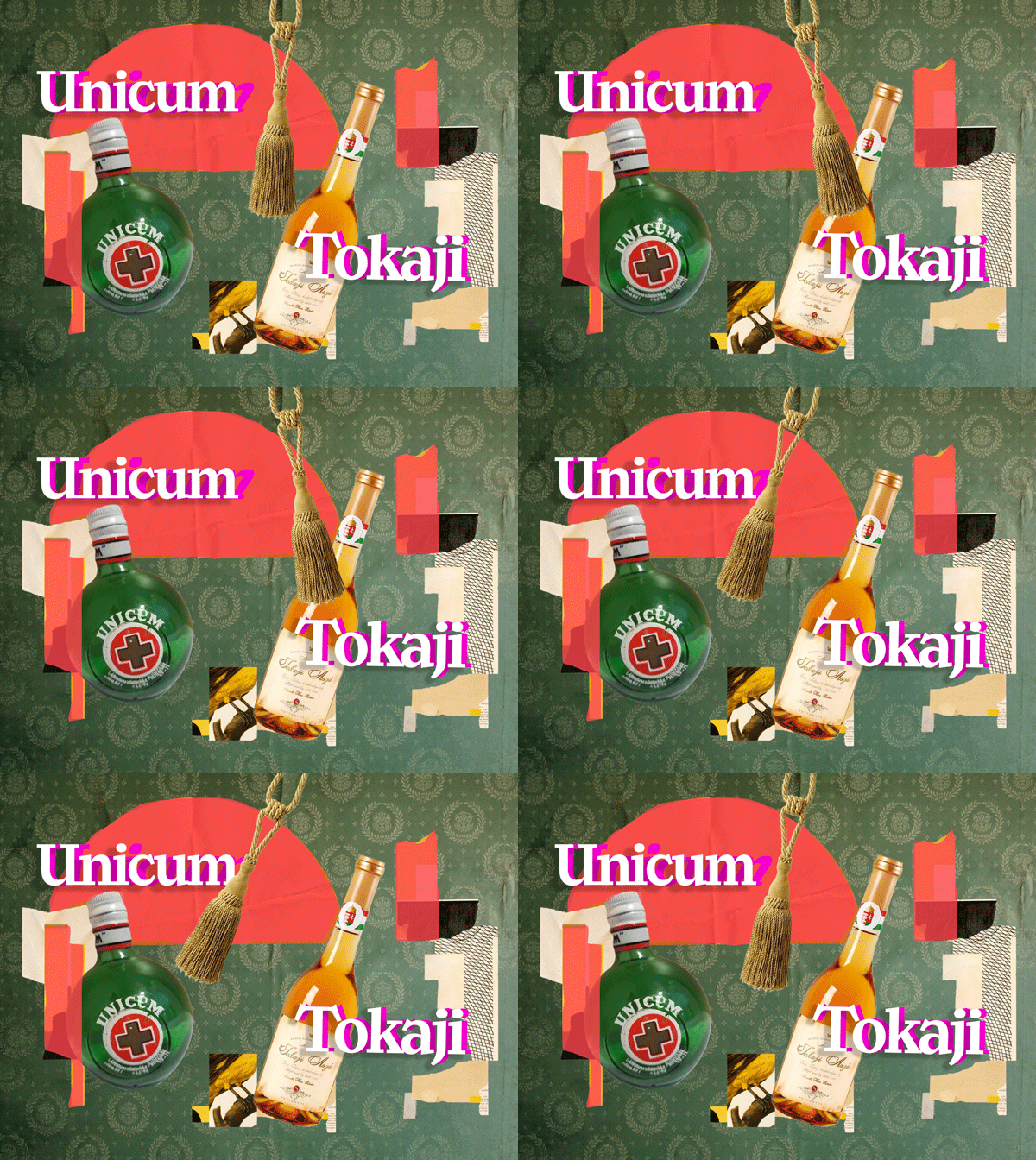
Tokaji: measuring the king’s wine in carriages
The Tokaji was both the greatest legacy and the greatest failure. This is the wine to which the Louis XIV quip – the wine of kings, the king of wines – was attributed, practically shipped as a royal reference for centuries; in the Polish and Russian markets it functioned as a brand name already in the 17th century.
Then in the fifties state farms took over the scattered hill country farming, and on January 1, 1971 these and the winery merged to form the Tokaj-Hegyalja State Wine Combine (yum-yum, we almost crave the wine produced in the Wine Combine). It basically covered the whole wine district from vineyard to wine trade. The logic inverted: instead of quality, it was quantity; instead of Western prestige markets, the CMEA became the goal. Drink, and the worker will be at ease.
The socialist Hungarian wine industry peaked in 1983 when more than half of the total production went to CMEA countries. By contrast, on markets with dollar accounting, Hungarian wines were typically only competitive in the cheapest categories. The large-scale, oxidative style slowly ground down what three hundred years of tradition and careful care had built.
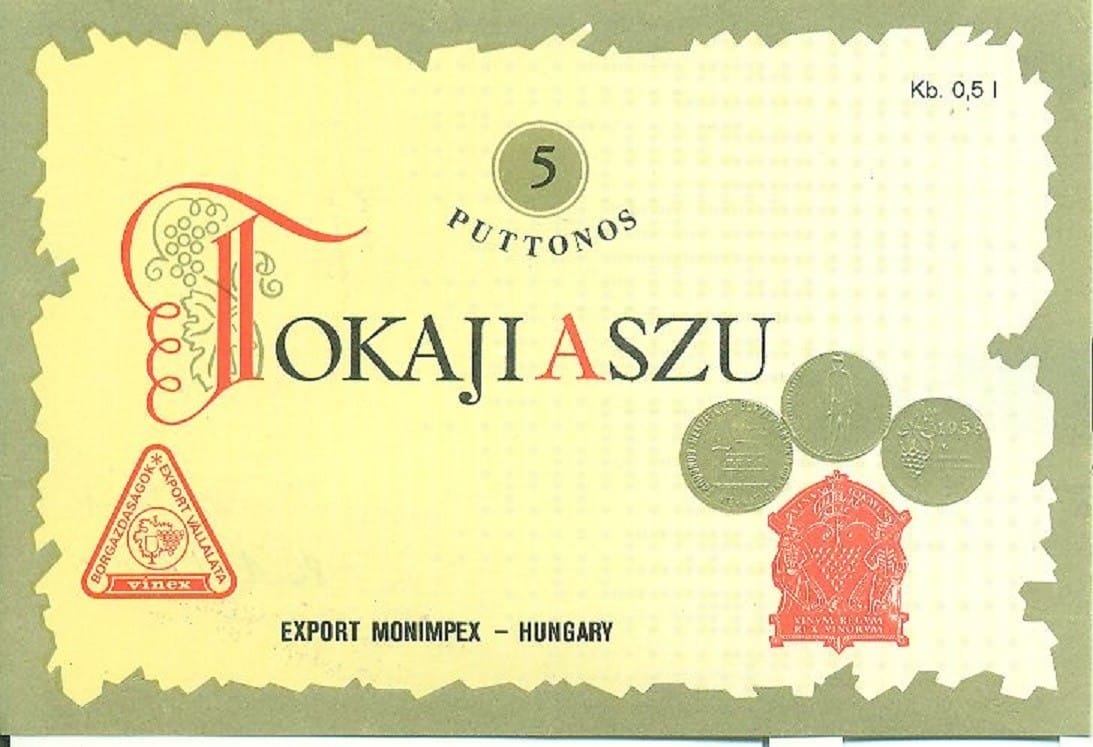
Yet the showroom outwardly remained royal all along. Monimpex already in 1952 produced trilingual Aszú posters; a 1953 vintage three-puttonyos Aszú advertisement photo survives from 1953, a 1965 from the Budafok export cellar's bottle. The company even in 1981 and 1985 trademarked the Tokaji Szamorodni name in the United States – the socialist state carefully registered American trademarks for a wine that domestically squeezed out its soul by the combine. The communications continued to carry the legend heroically, which the cellar itself could not have substantiated even if it had wanted to.
Say it nicely, in advertising terms? Look, this is what happens when the brand promise and the product truth drift apart: here it is, bottled.
There is a peculiar subplot to the story. While large-scale production for decades pulled Tokaj away from the quality its reputation was built on, something of the old world remained in the cellars’ depths.
Tolcsva and Szegi today guard about four hundred thousand bottles of museum Tokaji. Much of the collection is not due to the Wine Combine, but heritage: the prewar Royal Cellarist and Treasury holdings, as well as bottles that farmers bricked up to hide from the front and later found in state-owned cellars.
The socialist decades’ wines were curated by János Pogácsás, a horticultural engineer: he tasted the state cellars’ items and decided which aszú and szamorodnik deserved to remain for posterity. What a job.
The system’s absurdity also reached the collection: some of the carefully selected museum wines were bottled with corks imported from Portugal of varying quality, and several lots were ruined exactly because of this.
Yet something was created that today we would call a brand archive: a memory bottled in bottles from Tokaj whose reputation even the large-scale era could not completely erase. When after the regime change the wine region began rebuilding itself, there was at least something to rely on.
Unicum: the brand that dissented
This is the most film-like of the four stories: not by chance did it inspire István Szabó in his family history A Day of Light: in Sonnenschein family’s secret recipe liqueur, you can easily recognize the imprint of Unicum.
According to its origin myth, in 1790, after tasting an stomach-soothing cordial given by the Zwack family ancestor, Emperor Joseph II exclaimed: “Das ist ein Unikum!” – and this sentence has been the brand’s cornerstone ever since.
By autumn 1948 János Zwack was not trying to save the factory, but himself. In the eyes of the communist regime the family had become politically unreliable, and János feared he would be arrested sooner or later. According to later American court papers, the Zwacks were prepared to hand the company to the state without compensation, on one condition: János would receive a passport and could legally leave the country. He did not receive it. In November 1948 he eventually slipped to Vienna, and the factory was “taken over” by the state.
And here begins the brand story’s loveliest double game. According to the family legend, Zwack Béla handed a fake recipe to the new management, while János kept the real one in his inner pocket, concealed under a turned barrel, smuggling it across the Austrian border on a bribed Soviet driver’s truck.
The essence was the same: from then on there were two Unicums. In Budapest the state-owned company produced its own version – based on the fake recipe – and in emigration the family restarted the original, in Italy.
The front line did not lie along the border but in trademark offices and courts. The Zwacks had been the exclusive New York distributor since the thirties; after nationalization, Kraus Bros. simply switched: recognizing the state as owner, they imported the state’s product under the old name and labels. The family sued, and American court decisions between 1950 and 1956 stated: forced, uncompensated nationalization violates U.S. public policy, thus it has no extraterritorial effect. The American trademarks remained with the family, and the distributor illegally sold the state product under the Zwack brand. The fate of a Hungarian family brand thus became a textbook case in international trademark law.
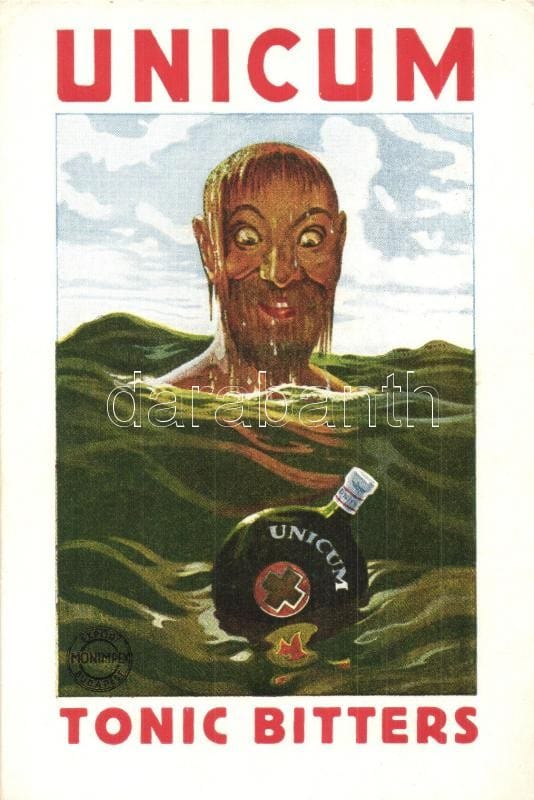
The Monimpex meanwhile carried the state version; you can still find English-language posters reading “Unicum Tonic Bitters – Monimpex Export Budapest” at auctions. One brand name, two producers, two recipes, and a legal front line that exactly followed the Iron Curtain.
The resolution came with the regime change: Zwack Péter was lured home in 1987 at the invitation of Sándor Demján, the family moved back from Tuscany to socialist Hungary; Péter became the country’s first Washington, D.C. ambassador in 1990, and in 1991–92, during privatization, bought back the factory. The recipe returned, and with it the marketing tool that had powered the brand from the start: the secret itself. According to the company’s narrative, today the full recipe is known by only two family members.
When the competition authority audits the legendAn unnamed private individual filed a complaint with the Hungarian Competition Authority: he claimed that Zwack is misleadingly using the 1790 year of Unicum’s origin. In March 2025 the GVH decided there was no grounds for proceedings, but the complainant was not deterred and went to court, and the Metropolitan Court in October 2025 annulled the authority’s decision, ordering the GVH to investigate within 30 days. The proceedings thus began in December 2025. The authority then took its job seriously and first mapped how prominent the year is in the company’s communications. It found it in the corporate logo, the official website’s “History”, “Products” and “Brands” sections, and in the phrase “more than 230 years a secret”; on TV commercials and posters, however, it mostly appears as a bottle detail. In other words, a state authority performed what an agency would call a brand audit and billed for it.The conclusion is a parable. The authority stated that it is possible that Unicum did not exist in the form we know today in 1790, but it cannot be definitively ruled out, so lacking conclusive evidence the procedure was terminated in summer 2026.As marketers it is hard not to notice: a well-written origin legend is precisely like this: unprovable and unfalsifiable.The historical fact is this: II. Joseph died on February 20, 1790, the factory was founded fifty years after the legendary tasting, in 1840, by Zwack József, and the company’s own museum website also refers to this as family legend.
The Zwack brand’s survival is a veritable early twentieth-century adventure novel: the secret recipe could not be obtained by any full nationalization, the trademark was protected beyond the Iron Curtain, and the origin legend even the competition authority could not find a handle on. In the end, everything that makes a brand a brand—the recipe, the name, the legend—was back where it started: under family control.
The showroom: where Hungary is the brand
So far we’ve talked about four brands. But in the West these were never just porcelain, wine, or stomach liqueur: they carried the image of a country with them.
The system’s grand Western debut came in 1958, at the first post-World War II world’s fair in Brussels. The Hungarian pavilion wasn’t placed anywhere else: at the foot of Atomium, between the Soviet and American pavilions – right in the middle of the Cold War geometry. And while the press enthusiastically listed the technical-scientific pride, the real attraction became the five-hundred-strong Hungarian restaurant beside the pavilion. Sándor Lakatos and his band performed, József Venesz led the kitchen, and in the Hungarian team, master chef János Rákóczi played a decisive role. His túrós (curd cheese) dumpling became world-famous here, though its recipe had already appeared in a professional journal, Magyar Szakács, in 1937. The success earned him a third-class merit and the permission to name the dessert after himself – the authorities were generous, to be honest. The home press reported with excitement about the queues in front of the entrance: the success launched organized foreign promotion of Hungarian cuisine. Behind the pavilion’s visual design stood Tibor Piros, a graphic designer, whose career’s turning point was Brussels: according to exhibition history literature, for two decades he designed the Budapest International Fair’s light-industrial pavilion’s visuals (and he also designed Hungary’s coat of arms). Socialist Hungary’s exhibition design thus began its referential work here.
Dates are cruel too: two months after the pavilion’s April opening, on June 16, 1958, Imre Nagy was executed. While in Brussels people queued for paprikash chicken, Budapest carried out repression. The contrast between country branding and reality rarely collided so sharply, and this tension remains the oppressive backdrop to all export communications of the era.
And this showroom had a strange domestic version as well: the dollar shops. Konsumex, then Intertourist currency shops allowed purchases only with Western money. For Hungarian buyers, not only foreign currency was required but also documents proving its legal origin – in other words, the showroom could be viewed by anyone, but only those who traveled West, worked there, or had relatives sending dollars home could actually buy.
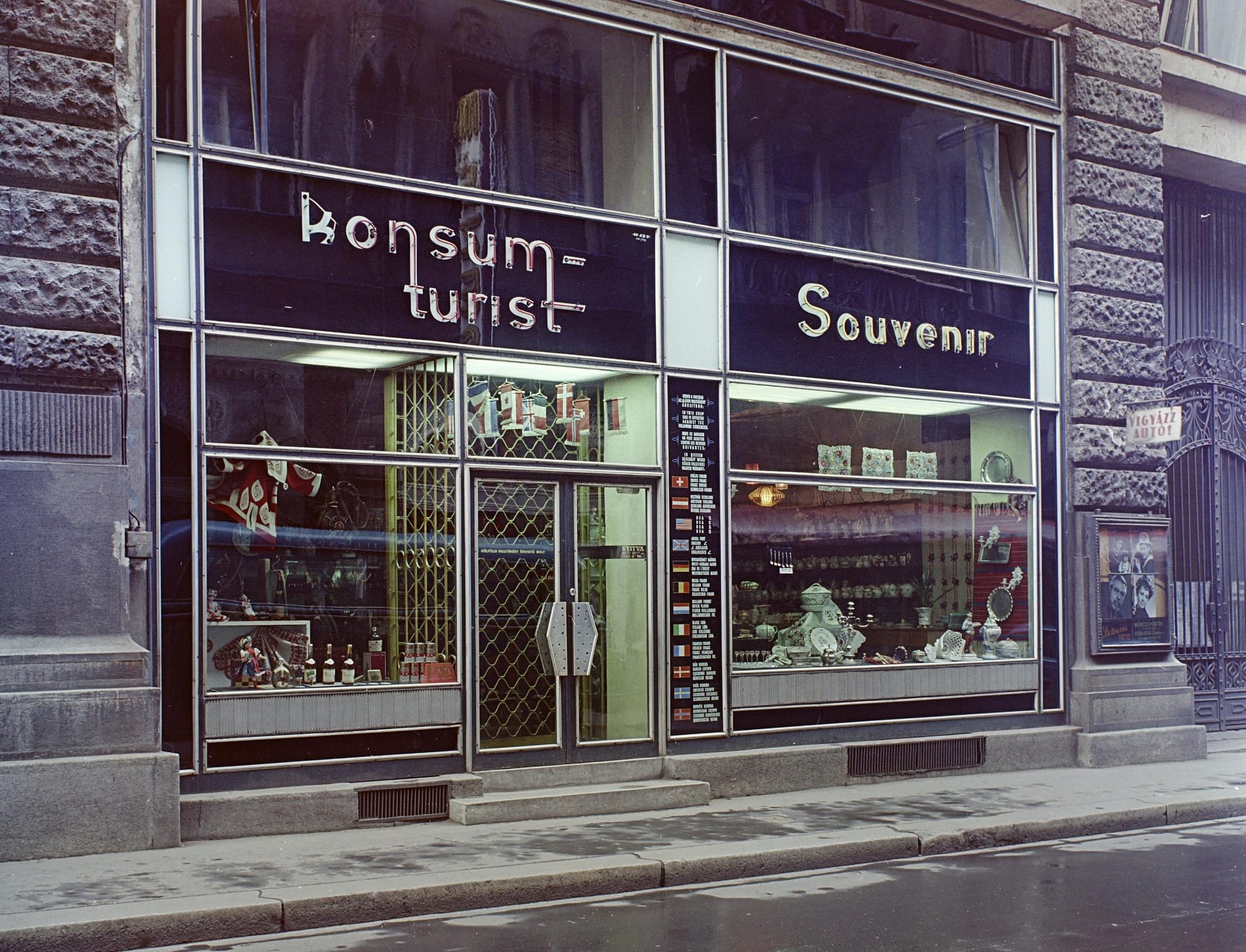
The Western paradise was thus allowed into Hungary, but the great majority of Hungarians did not receive money for it.
For Hungarians this was the doorway to Marlboro, Lego, and Barbie – for Western tourists, however, the opposite: a 1985 Népszava article says they took home Hungarian Herend porcelain, winter salami and folk art items. The same shop network sold Western values to Hungarians and Hungarian heritage to Westerners. Few clearer metaphors exist for the Kádár era’s double-entry bookkeeping.
What is the message of this in 2026?
First, that brand value remained brand value even in a dictatorship.
The 1974 Zsolnay license agreement is strong evidence: a state power that could take everything (and did) ultimately had to regain the name by agreement. Anyone today who casually throws away decades of brand equity during a rebranding should imagine what it felt like to sign that contract.
Second: even if distribution and communication are in one hand, if the product itself crumbles. Monimpex controlled how wine got out abroad and also what stories were told about it. But the planned economy wore away what Tokaj built. Tokaji’s case shows that even the most beautiful inherited image is only a credit line: if the product does not repay for decades, the brand’s value pays the price. A poster can front the front line, but the war is lost in the cellar…
Third: an intriguing origin story is the cheapest and most durable media surface. Queen Victoria’s order, II. Joseph anecdote, the recipe kept in a inner pocket: these are “inherited advertisements” for which one never has to pay again, only preserve them. Or, in some cases, reclaim them.
And fourth: these brands never marketed themselves alone. Herend, Zsolnay, Tokaji, and Unicum sold Hungary on the other side of the Iron Curtain – a Hungary that did not officially exist at home.
In Brussels, at world’s fairs, in export catalogs and in currency shops, they showed a much different face than at home. The West was not sold the socialist meaning, but everything that the regime would have preferred to leave behind domestically: porcelain tied to royal courts, centuries-old wine traditions, family recipes, and aristocratic origin stories.
Today we would call this nation branding. Then there was a simpler reason: this is what paid with hard currency.
And perhaps the most vile contradiction of this whole story: while at home they were trying to erase Hungary’s old symbols, in the West these were exactly what sold best. The past was fought with fire at home, only to be exported with a golden thread.
Surprise someone with this article; then ask for their opinion on it. In the end, you might have a good chat about the topic. Or about anything else. It’s worth it, isn’t it?
Iratkozz fel, és havonta küldünk hírlevelet, amitől sokkal okosabb leszel!